I've been lurking around the Earthbag Building Blog, the blog arm of earthbagbuilding.com, for a while now and I the idea of earthbag building has seriously grown on me.
The basic idea is to take a common resource, dirt, tamp it down into a bag, and stack it into walls. Now the first image that I though of was of sandbag bunkers and levies, and thats basically the same thing. The difference between my, Vietnam era firebase, sandbag bunker and a earthbag home is the way the bags are packed and connected. Often times soil is packed in to make the bag as dense as possible and rows of bags are connected using barbed wire as "cement".
Once the bags are layed up, windows and doors framed (box frames are secured right onto the bags), and the roof built (by traditional trusses or earthbag domes), then an earthen plaster is applied to seal the bags and finish the walls. Earthen plaster is a reoccurring theme in sustainable building, namely because of its world wide ubiquity and its durability. You might remember a small discussion of earthen plaster in my post about strawbale building and how it provides a active vapor barrier that allows vapors to pass in an out of a structure without trapping them, which causes mold and mildew problems.
A completed earthbag structure is among the most durable in the realm of sustainable building, surviving almost all natural disasters or at least surpassing the survival rates of conventional methods. This makes for a impressive structure at a potentially $0 pricetag. Considering that foreign food aid comes in bag form, think rice and grain bags, the price tag of building these structures can be very low if not zero, excluding labor costs. The third world and emergency situation implications are tremendous. Currently earthbag buildings are being promoted in Haiti, which still lies in ruins after the January 2010 earthquake. The US Military has even offered workshops in Djibouti, to teach those who are interested how to build affordable shelter. Earthbags have also seen widespread adoption across the continent of Africa, and Middle Eastern countries, including Iraq, Afghanistan, and Pakistan.
For those of you wondering about where you might find sandbags take a look here or here for ideas. A box of 1000, surplus GI, sandbags runs about $360, not bad considering the comparative cost of conventional building supplies.
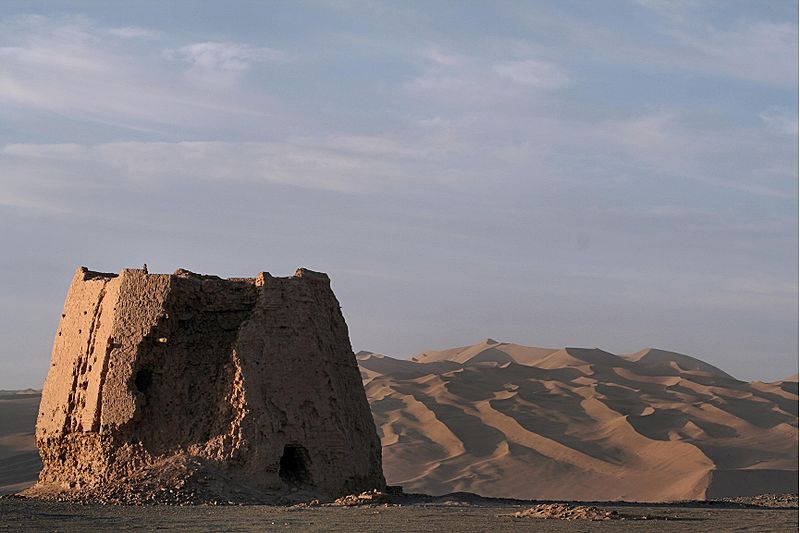
Earthbags might be a new take on the rammed earth idea, but the idea itself is one of the oldest in the world. Rammed earth structures have been around since man figured out that earth is compactable. Here is a link to a rammed earth watch-tower, built in China, that dates back to the Han Dynasty (200's BC). My thinking here is pretty cliche, if it ain't broke.... So given that this building style has been around for thousands of years in one way, shape, or form, perhaps it deserves more attention from the modern home building community and sustainability activists. I'd love to see how this method of construction would survive Northeastern winters, and springs for that matter. If it turned out that it was a viable building style then I'd love to live in something so simply build, timelessly beautiful, and completely sustainable.
Monday, December 13, 2010


Appropedia, awesome wiki site that I just stumbled across.
Hello again!
Today I'm actually using my down time in a positive way by posting. While browsing my rss feeds on Google Reader I came across a link to this website; Appropedia.
Appropedia is a knowledge sharing wiki site based around sustainable living, which is right up my alley! Within five minutes of link clicking I was able to find information about a range of things from induction heating to composting. They have a lot of pages that are even loosely based around moral and philosophic questions, i.e. small houses, and the use of barbed wire.
That is all on this post but I strongly suggest you browse for a little while on this site and see what you come up with. Find something cool? Why not post a link in the comments" section and share with my readers and I?
Today I'm actually using my down time in a positive way by posting. While browsing my rss feeds on Google Reader I came across a link to this website; Appropedia.
Appropedia is a knowledge sharing wiki site based around sustainable living, which is right up my alley! Within five minutes of link clicking I was able to find information about a range of things from induction heating to composting. They have a lot of pages that are even loosely based around moral and philosophic questions, i.e. small houses, and the use of barbed wire.
That is all on this post but I strongly suggest you browse for a little while on this site and see what you come up with. Find something cool? Why not post a link in the comments" section and share with my readers and I?
Wednesday, December 1, 2010
Dan Phillips and Creating Houses from Recycled Materials
I just found this excellent video, from TEDxHouston, of a talk given by a man named Dan Phillips on the creation of homes from recycled and re-purposed materials. I definitely thought that it was going to be meat and potatoes on home building and how to use/find materials to use. Boy was I wrong!! This, most excellent, talk is as much about philosophy of home construction, and how we live within our homes/communities, as it is anything else.
Mr. Phillips discusses basic philosophy in the terms of how we seek, build, finance, and live in our homes. A really interesting way to approach things indeed. He breaks it down into two major ways of looking at homes based on Friedrich Nietzsche's concept of the Apollonian and Dionysian. Now Nietzsche wasn't the first to discuss these two in opposition to each other, I think that was probably Plutarch, but Nietzsche went the extra mile to oppose the two diametrically. The Apollonian being the ordered, the ideal, the logical, the thinking, the appreciation for visual and tactile things, whereas the Dionysian is the chaotic, the intoxicated state, the instinctual, the feeling, the appreciation for reality (organic structure?). Applied to modern homes you have the Apollonian McMansion, and the Dionysian [name your organic/sustainable/recycled home design ethos].
Within this framework Phillips breaks down the ideas behind his work and why it is important. The largest driving force, within the home construction industry, is the waste created by the consumer. Formally waste was all over, the industrial revolution had a dirty, wasteful start (think your turn of the century saw mill or steel furnace), now we are presented with a industrial process that is certainly wasteful in terms of pollution but not necessarily use of raw materials. Modern mills and plants that make materials for use in home construction have the process of getting the most out of a raw material to a T. If you have ever been present at, or watched a video of, a modern saw mill in action you will have undoubtedly noticed the advancements made in production of dimensional lumber. Computer technology has allowed a mill to calculate the most efficient use of a log within milliseconds and then cuts it accordingly, gone are the days of cutting 2x4's from one log then 4x4's the next and so on. The problem of waste lies with the consumer.
Phillips gives an example that I, myself, have been guilty of, turning away a piece of lumber because it is somewhat warped. Another example is throwing out the off cuts of pieces of lumber and not using them for other projects and applications. Yet another is replacing any piece of a home just because of a minor imperfection that changes or, in the eyes of most, depreciates its value. This is as bad an example of wanton over consumption as any. Years ago people wouldn't waste anything they bought when building a home or making anything in particular. Today we throw away most of what we buy.
Mr. Phillips believes that a return, or more like a shift, towards the Dionysian side of life, is required in order to conceive of and create a less wasteful way of life. Mr. Phillips, you are preaching to the choir. This shift from an ordered way of building would allow us to get in touch with a more organic and natural expression of our wants and needs. His ideas are quite provocative and I strongly urge you to take aside for a few minutes and watch his talk. Without further diatribe, here is Mr Phillips.
Search Amazon.com for recycled home
Mr. Phillips discusses basic philosophy in the terms of how we seek, build, finance, and live in our homes. A really interesting way to approach things indeed. He breaks it down into two major ways of looking at homes based on Friedrich Nietzsche's concept of the Apollonian and Dionysian. Now Nietzsche wasn't the first to discuss these two in opposition to each other, I think that was probably Plutarch, but Nietzsche went the extra mile to oppose the two diametrically. The Apollonian being the ordered, the ideal, the logical, the thinking, the appreciation for visual and tactile things, whereas the Dionysian is the chaotic, the intoxicated state, the instinctual, the feeling, the appreciation for reality (organic structure?). Applied to modern homes you have the Apollonian McMansion, and the Dionysian [name your organic/sustainable/recycled home design ethos].
Within this framework Phillips breaks down the ideas behind his work and why it is important. The largest driving force, within the home construction industry, is the waste created by the consumer. Formally waste was all over, the industrial revolution had a dirty, wasteful start (think your turn of the century saw mill or steel furnace), now we are presented with a industrial process that is certainly wasteful in terms of pollution but not necessarily use of raw materials. Modern mills and plants that make materials for use in home construction have the process of getting the most out of a raw material to a T. If you have ever been present at, or watched a video of, a modern saw mill in action you will have undoubtedly noticed the advancements made in production of dimensional lumber. Computer technology has allowed a mill to calculate the most efficient use of a log within milliseconds and then cuts it accordingly, gone are the days of cutting 2x4's from one log then 4x4's the next and so on. The problem of waste lies with the consumer.
Phillips gives an example that I, myself, have been guilty of, turning away a piece of lumber because it is somewhat warped. Another example is throwing out the off cuts of pieces of lumber and not using them for other projects and applications. Yet another is replacing any piece of a home just because of a minor imperfection that changes or, in the eyes of most, depreciates its value. This is as bad an example of wanton over consumption as any. Years ago people wouldn't waste anything they bought when building a home or making anything in particular. Today we throw away most of what we buy.
Mr. Phillips believes that a return, or more like a shift, towards the Dionysian side of life, is required in order to conceive of and create a less wasteful way of life. Mr. Phillips, you are preaching to the choir. This shift from an ordered way of building would allow us to get in touch with a more organic and natural expression of our wants and needs. His ideas are quite provocative and I strongly urge you to take aside for a few minutes and watch his talk. Without further diatribe, here is Mr Phillips.
Search Amazon.com for recycled home
Thursday, November 25, 2010
Thanksgiving
Nothing much to report today except for the fact that another year has gone by and it is time for Thanksgiving. As we all know the first Thanksgiving didn't actually involve turkey, they hadn't quite thought of that back in 1621. Originally a three day feast, Thanksgiving was made an official holiday by Abe Lincoln, and then later given an exact day by FDR. One sad note about why Thanksgiving was made to be on the fourth Thursday of the month of November is that part of FDR's motivation was to create a day that would encourage early holiday shopping. This was our first step towards the wanton consumer orgy that is Black Friday... I won't go off on that tangent today but I will say that it's a sad thing to think about.
However, I am still thankful for this, my second favorite, holiday. Any time that we can get together with your families and share a meal is a very special time and we should all be happy we still have the luxury of a good meal. The only thing I will try to say to you today is please eat local, buy your turkey and veggies from local farms, and remember that you are all part of a complex system that needs to be responsibly maintained. The more we do to bring days like today back home and back to our local farms makes it more and more likely that we will have these gatherings in the future.
"Thy bounty", is our bounty, cherish it.
However, I am still thankful for this, my second favorite, holiday. Any time that we can get together with your families and share a meal is a very special time and we should all be happy we still have the luxury of a good meal. The only thing I will try to say to you today is please eat local, buy your turkey and veggies from local farms, and remember that you are all part of a complex system that needs to be responsibly maintained. The more we do to bring days like today back home and back to our local farms makes it more and more likely that we will have these gatherings in the future.
"Thy bounty", is our bounty, cherish it.
Tuesday, November 23, 2010
Where in the world is Mr. K?!
Sadly I fell away from blogging over the last summer and this fall. My job situation and the amount of bouncing around I have been doing has been keeping me almost too busy to think much less write an epic blog post. Well folks, I make no guarantees, but Mr. K is coming back.
Since we last left off my focus has shifted some away from policy and politics of our predicaments and focused more on skills and practice of living a more sustainable life. Along with that shift I have realized the necessity in skill development and refinement. This focus actually came from my recent participation in my local Fencing School, where I have taken a coaching role, teaching private and group lessons along with the facilitation of larger group lessons and activities. Focusing on improving my fencing skills, as an educator, has really helped develop an idea of the types of things I would like to focus on in my own life.
Along with my ever deepening foray into fencing, I planned and executed the great experiment that was known as Xtreme Camp. Xtreme Camp is a nine week, extreme sports and outdoor adventure summer day camp, designed for children ages 8-14. This camp involved about sixty to eighty campers a week participating in a variety of activities from mountain boarding and paintball to orienteering and survival skills. I had seven counselors and about five CIT's working with me. Together we created one of the most successful summer camp programs in the area. Again a lesson learned here was how to be creative and how best to employ ingenuity and leadership qualities.
So with all that being said I hope to be bringing you more posts in the future and if I can't find the time at least you know that I am out there doing good things and working hard to change the world for the better! See you all soon!
~K
Since we last left off my focus has shifted some away from policy and politics of our predicaments and focused more on skills and practice of living a more sustainable life. Along with that shift I have realized the necessity in skill development and refinement. This focus actually came from my recent participation in my local Fencing School, where I have taken a coaching role, teaching private and group lessons along with the facilitation of larger group lessons and activities. Focusing on improving my fencing skills, as an educator, has really helped develop an idea of the types of things I would like to focus on in my own life.
Along with my ever deepening foray into fencing, I planned and executed the great experiment that was known as Xtreme Camp. Xtreme Camp is a nine week, extreme sports and outdoor adventure summer day camp, designed for children ages 8-14. This camp involved about sixty to eighty campers a week participating in a variety of activities from mountain boarding and paintball to orienteering and survival skills. I had seven counselors and about five CIT's working with me. Together we created one of the most successful summer camp programs in the area. Again a lesson learned here was how to be creative and how best to employ ingenuity and leadership qualities.
So with all that being said I hope to be bringing you more posts in the future and if I can't find the time at least you know that I am out there doing good things and working hard to change the world for the better! See you all soon!
~K
Friday, March 19, 2010
Communitarianism
This is a good article I found on the Times's website. Give it a read. I think Phillip Blond's essays echo many of my own feelings.
Tuesday, March 9, 2010
Planning with Intent: Planning my Intentional Community
So planning for a long term intentional community might seem like a big and scary task. Something that might easily overwhelm any person who was to take on such a venture, but for as complicated as it is, to plan such a community isn't insurmountable. I have been kicking around ideas to plan, build, and make profitable a intentional community aimed towards self sustainability, agricultural education, and a farm stand/store. Below is my starting five year plan.
The Compound....(Yea I know its kind of intimidating but we haven't figured a name yet)
The Compound....(Yea I know its kind of intimidating but we haven't figured a name yet)
- Year 0
- Membership:
- 4-8 central starting members
- Likely to be divided between major financial contributors and major labor contributors.
- Planning will be equally shared and voted on, so a odd number of people would be best.
- Full-time, live in staff responsible for labor, building, and management.
- Part-time, non-live/seasonal live-in in staff responsible for finance, legal, PT-labor.
- Central members set goals and a overarching vision for group/project.
- Plans that set guidelines and expectations for years 1, 3, 5, 10, 15, 20, etc.
- Combine initial investments and incorporate as a group.
- Search for a suitable land investment:
- 150-200acres
- Good water, (lake, ponds, streams, rivers, quality ground water)
- Good initial soil and slope for farming
- Reasonable timber resources for building and sustainable timber operation
- Proximity to local municipalities
- Proximity to major towns and/or cities
- Access to local grid (phone, power, network)
- Standing structures are a bonus
- Previously farmed land is a bonus
- Set final plan for farming and long term expansion of farming efforts
- Viable crops, cash crops, subsistence
- Crop rotation
- Agricultural style (organic, no-till, etc)
- Make initial contacts with Timber management company
- Early income potential
- Begin initial equipment investments
- Basic tools
- Tractor and attachments
- Portable Sawmill? (would be excellent for structure building)
- Power generation equipment (solar or small scale wind)
- Water storage
- Power tools
- Year 1
- Establish residency.
- Initially part time
- Rehab of standing structures and construction of small scale residences
- Initial structure building prep
- Season timber for building (why we would use/need a sawmill)
- Establish structures for farm facilitation and equipment storage
- Clear/prep land for farming.
- Establish green manure/composting/soil building program at this time to effectively recycle cleared materials.
- Soil tests for pH and mineral contents to plan amendments and initial cover crops
- Cut and dry firewood for future
- Establish water and waste systems
- water conservation and protection
- water acquisition
- if a well is needed have it dug
- water storage (cistern or catchment system)
- waste water recycling. (earthships model)
- waste recycling (composting)
- Establish subsistence farm
- provide food to residence
- provide crop effectiveness feedback
- Plan and establish initial animal husbandry
- chickens are easiest!
- plan for sheep, pigs, horses, cows, or whatever animals are desired for draft and food purposes.
- Begin contacting schools for initial internship possibilities and planning
- cheap labor
- agricultural education is positive for the community
- get kids out of the cities and off the streets for the summers
- provide skills, training, and food for good, honest labor on the farm
- Years 2-3
- Establish living quarters for full time residents and a bunkhouse for visitors.
- Living spaces would be best if shared initially via a large common farmhouse or lodge.
- Built from harvested timber for year before, and built with recycled or locally sources materials. Strawbale would be best, in my opinion.
- Expand farm to commercial scale.
- Expand residential food garden too support a local farm stand and farmers market stand. Possibility would exist to create a CSA out of farm should that be desired at the time.
- Cut and clear more land, expand crop variety.
- Management of farm must be efficient if venture is to succeed
- Begin implementation of internship program to staff farm through the summer months
- This would also be a good time to begin looking for people to "buy in"
- Expand animal husbandry and seek a facility to process animals locally or on site if possible.
- These years will be critical to success of venture because of initial dependence on the success of the farm and related commercial ventures. If revenue from farm is substantial enough to see a profit then profit should be reinvested into the farm in order to expand and streamline production. Larger farm=larger return.
- Begin development of processed foods such as syrup, honey, cheeses, preserves, pickled vegetable etc as an expansion of agricultural market.
- Years 4-5
- If things with farm are on an even keel this would be time to begin planning of other investments on site.
- Suggestions include: meeting spaces, artists retreats, artistic facilities and work spaces, bed and breakfast, restaurant etc.
- These must be viable businesses that stand alone from farm financially. Financial interdependence could be a dangerous web should one venture or another fail.
- Lodge and surrounding full time residences should be complete along with workshop spaces, equipment sheds, water storage and processing, bunk houses, part time residences etc. These should have power and facilities independent of one-another.
- Development of a CSA group to better facilitate farm growth.
So this is where my ideas begin to stretch and get foggy. However, this is just because I have been more preoccupied with the details of the initial buildup that I haven't developed a solid plan that extends further than five years. So here is where I want your input and suggestions. What can be developed further? What can be added? What should be changed? What risks do you see? What could potentially make for a more sound idea? Anything you wish to contribute would be appreciated! Thank you!
Subscribe to:
Posts (Atom)



 Posts
Posts