Tuesday, February 1, 2011

Bladeless Wind Turbines; An Interesting Concept For Alternative Energy.

Yesterday on The Tiny Life, I saw this article on a bladeless wind turbine concept that is more animal and NIMBY friendly. The concept is that a stack of blocks or forms made of foam, or other materials of similar density, are attached to poles in a grid-like pattern. These poles have small alternators at their connection that turn the movement into energy. As the blocks swing, or vibrate, back and forth in the wind they generator produce electricity. 

The novel part of these generators is how they operate, the lack of large moving blades and tall towers, leave a very small physical and visual footprint. The low density blocks begin to move in the slowest of breezes, meaning that they will produce at least a little energy in low winds. The lack of spinning blades mean that these generators are more friendly to animals frequently disturbed by the typical wind turbine. Bats, migrating birds, eagles, hawks, bees, etc. are all in danger from the large spinning blades. No blades, no danger! And the NIMBY crowd will love these because of the low visual impact. 

My verdict on these bladeless turbines is that they are not a solution to energy problems, but another helping hand along the way. They might work well in urban and suburban situations, but I doubt that they will draw much power. The design seems to be limited in that sense. That being said a well designed and advanced iteration of this concept might be able to power a small home, or a very efficient home. Large scale energy production with this concept will likely remain a concept. 

Stay safe in this snow!

Thursday, January 27, 2011

The Navy and Marine Corps Embrace Alternative Energy to Save Lives and Reduce Fossil Fuel Use

Being a part of the United States Military myself, I relish the opportunity to speak about the great things the Military is doing to save the lives of soldiers. Today on Treehugger I saw a post about how the Marine Corps have been experimenting with solar charging systems to reduce the need for fuel to power electric generators. 

According to the Office of Naval Research (ONR), the two main systems employed in the field are their Ground Renewable Energy Networks (GREENS), and the Solar Portable Alternative Communications Energy Systems (SPACES). With these two new systems, along with the deployment of LED lighting systems, Solar Shades, and Solar Light Trailers, the Marines saw a reduction of up to 90% in their fuel consumption. These systems allowed for the Marines to overcome many obstacles. By using the SPACES system Marines could recharge batteries on extended patrols, no need to return to their FOB to resupply. The introduction of GREENS PV battery charging system allowed larger bases to reduce their daily fuel consumption to 2-3 gallons from 25. 

These advancements make many things possible but the biggest advantage is saving lives. The men and women of our Armed Forces deserve every technology possible to help them accomplish their missions and return home safely. By deploying these systems in the field fuel resupply convoys will not have to risk their lives and equipment. A 90% reduction in fuel consumption means a 90% reduction in the supply chain that delivers that fuel. A 90% reduction in vulnerable fuel tankers and supply trucks exposed to IED's and ambushes. This is a huge step forward in reducing the Military's dependence on foreign oil and fuel, and anything to save the lives of our Soldiers is supremely important. The ONR's full report is available here.

Tuesday, January 25, 2011

Eager to start a garden this spring? Beware of seeds from Monsanto!

If you are like me you enjoy watching the crops and flowers you plant in the spring grow and develop. There is certainly nothing more satisfying than reaping that which you sow, but this day in age it can be a lot more complicated than that. As we all know many seed varieties out there are genetically modified to produce stronger, more productive plants, seemingly a great concept. However, there are many problems with this concept.

My biggest issue with this whole arrangement is that very few companies hold a monopoly on the supply of seeds, making them a very pretty, not so green, penny. Along with that these companies are into some very shady practice. For instance, the company Monsanto, one of the worlds largest seed producers is famous for suing farmers who grow crops adjacent to farms using Monsanto seeds. Their argument is that because the crops near the Monsanto plants might be fertilized by the Monsanto plant's pollen, those farmers then owe Monsanto royalties for the genetic information passed on. Utterly outrageous. Once more these seeds are often times designed so that their progeny are sterile and seeds collected from these genetically modified crops will, often times, not grow. This obviously forces farmers to continuously buy from one company. For sake of time, I won't start on how these seeds are often sold as part of a package deal of fertilizers and pesticides that are REQUIRED for these seeds to flourish.

If all this strikes you odd and maybe even enrages you slightly consider this article by Colleen Vanderlinden, titled; Keeping Monsanto Out Of Your Garden This Spring. In it she addresses which companies are owned by and sell seeds produced by companies like Monsanto and others. She also gives you some tips on knowing what to look for when buying seeds. If you want my opinion and you are from the Northeast, talk to the oldest person you know with a garden. Often times they keep their seeds for generations, and will have some genuine non-GMO heirloom varieties. If that doesn't work talk to the people at your local Farmers Market or Organic Co-Op, they will be able to point you to the varieties and companies, that work best with your local area. If all else fails start Googling, AND READ!

Friday, January 21, 2011

Collaborative Consumption, the return of a barter economy?

After watching Rachel Botsman's talk about Collaborative Consumption on TED, I find myself thinking more and more about barter economies and how incredible a resource the internet has become for the modern person with  a skill or product to sell.

What interests me more than the idea of sharing our possessions, or trading our possessions for another's, is the amount of trust and collaboration that it takes to get these transactions to take place. For years I have used sites like Craigslist and eBay to buy and sell just about anything, but also to look for jobs, sell my skills, and hire employees. But these are easily made transactions, things like sharing a car or tools take a considerably larger amount of trust. The fact that people can still trust each other to do these things is fantastic. Is this possibly a sign of a renewed sense of community brought on by our reliance of the internet? Fascinating.

So this new economy, an economy of content rather than ownership, what does that mean for local economies? Can we introduce these macro ideas of sharing over the internet to our micro, local, economies? I think we can, and many of these sites do just that. For instance Craigslist has a page for just about every major or large city or region of a state. The movement towards redistribution of possessions through these channels and in person transactions could help reinvent the local economy and interest in community. I like.  

Monday, December 13, 2010

Earthbag (rammed earth in a bag) building. I like.

I've been lurking around the Earthbag Building Blog, the blog arm of earthbagbuilding.com, for a while now and I the idea of earthbag building has seriously grown on me.

The basic idea is to take a common resource, dirt, tamp it down into a bag, and stack it into walls. Now the first image that I though of was of sandbag bunkers and levies, and thats basically the same thing. The difference between my, Vietnam era firebase, sandbag bunker and a earthbag home is the way the bags are packed and connected. Often times soil is packed in to make the bag as dense as possible and rows of bags are connected using barbed wire as "cement".

Once the bags are layed up, windows and doors framed (box frames are secured right onto the bags), and the roof built (by traditional trusses or earthbag domes), then an earthen plaster is applied to seal the bags and finish the walls. Earthen plaster is a reoccurring theme in sustainable building, namely because of its world wide ubiquity and its durability. You might remember a small discussion of earthen plaster in my post about strawbale building and how it provides a active vapor barrier that allows vapors to pass in an out of a structure without trapping them, which causes mold and mildew problems.

A completed earthbag structure is among the most durable in the realm of sustainable building, surviving almost all natural disasters or at least surpassing the survival rates of conventional methods. This makes for a impressive structure at a potentially $0 pricetag. Considering that foreign food aid comes in bag form, think rice and grain bags, the price tag of building these structures can be very low if not zero, excluding labor costs. The third world and emergency situation implications are tremendous. Currently earthbag buildings are being promoted in Haiti, which still lies in ruins after the January 2010 earthquake. The US Military has even offered workshops in Djibouti, to teach those who are interested how to build affordable shelter. Earthbags have also seen widespread adoption across the continent of Africa, and Middle Eastern countries, including Iraq, Afghanistan, and Pakistan.

For those of you wondering about where you might find sandbags take a look here or here for ideas. A box of 1000, surplus GI, sandbags runs about $360, not bad considering the comparative cost of conventional building supplies.

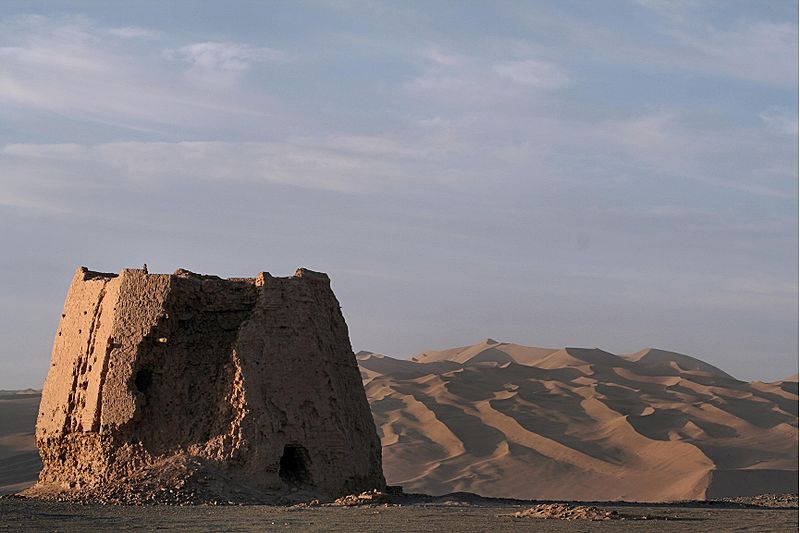
Earthbags might be a new take on the rammed earth idea, but the idea itself is one of the oldest in the world. Rammed earth structures have been around since man figured out that earth is compactable. Here is a link to a rammed earth watch-tower, built in China, that dates back to the Han Dynasty (200's BC). My thinking here is pretty cliche, if it ain't broke.... So given that this building style has been around for thousands of years in one way, shape, or form, perhaps it deserves more attention from the modern home building community and sustainability activists. I'd love to see how this method of construction would survive Northeastern winters, and springs for that matter. If it turned out that it was a viable building style then I'd love to live in something so simply build, timelessly beautiful, and completely sustainable.

Appropedia, awesome wiki site that I just stumbled across.

Hello again!

Today I'm actually using my down time in a positive way by posting. While browsing my rss feeds on Google Reader I came across a link to this website; Appropedia.

Appropedia is a knowledge sharing wiki site based around sustainable living, which is right up my alley! Within five minutes of link clicking I was able to find information about a range of things from induction heating to composting. They have a lot of pages that are even loosely based around moral and philosophic questions, i.e. small houses, and the use of barbed wire.

That is all on this post but I strongly suggest you browse for a little while on this site and see what you come up with. Find something cool? Why not post a link in the comments" section and share with my readers and I?

Wednesday, December 1, 2010

Dan Phillips and Creating Houses from Recycled Materials

I just found this excellent video, from TEDxHouston, of a talk given by a man named Dan Phillips on the creation of homes from recycled and re-purposed materials. I definitely thought that it was going to be meat and potatoes on home building and how to use/find materials to use. Boy was I wrong!! This, most excellent, talk is as much about philosophy of home construction, and how we live within our homes/communities, as it is anything else.

Mr. Phillips discusses basic philosophy in the terms of how we seek, build, finance, and live in our homes. A really interesting way to approach things indeed. He breaks it down into two major ways of looking at homes based on Friedrich Nietzsche's concept of the Apollonian and Dionysian. Now Nietzsche wasn't the first to discuss these two in opposition to each other, I think that was probably Plutarch, but Nietzsche went the extra mile to oppose the two diametrically. The Apollonian being the ordered, the ideal, the logical, the thinking, the appreciation for visual and tactile things, whereas the Dionysian is the chaotic, the intoxicated state, the instinctual, the feeling, the appreciation for reality (organic structure?). Applied to modern homes you have the Apollonian McMansion, and the Dionysian [name your organic/sustainable/recycled home design ethos].

Within this framework Phillips breaks down the ideas behind his work and why it is important. The largest driving force, within the home construction industry, is the waste created by the consumer. Formally waste was all over, the industrial revolution had a dirty, wasteful start (think your turn of the century saw mill or steel furnace), now we are presented with a industrial process that is certainly wasteful in terms of pollution but not necessarily use of raw materials. Modern mills and plants that make materials for use in home construction have the process of getting the most out of a raw material to a T. If you have ever been present at, or watched a video of, a modern saw mill in action you will have undoubtedly noticed the advancements made in production of dimensional lumber. Computer technology has allowed a mill to calculate the most efficient use of a log within milliseconds and then cuts it accordingly, gone are the days of cutting 2x4's from one log then 4x4's the next and so on. The problem of waste lies with the consumer.

Phillips gives an example that I, myself, have been guilty of, turning away a piece of lumber because it is somewhat warped. Another example is throwing out the off cuts of pieces of lumber and not using them for other projects and applications. Yet another is replacing any piece of a home just because of a minor imperfection that changes or, in the eyes of most, depreciates its value. This is as bad an example of wanton over consumption as any. Years ago people wouldn't waste anything they bought when building a home or making anything in particular. Today we throw away most of what we buy.

Mr. Phillips believes that a return, or more like a shift, towards the Dionysian side of life, is required in order to conceive of and create a less wasteful way of life. Mr. Phillips, you are preaching to the choir. This shift from an ordered way of building would allow us to get in touch with a more organic and natural expression of our wants and needs. His ideas are quite provocative and I strongly urge you to take aside for a few minutes and watch his talk. Without further diatribe, here is Mr Phillips.


Search Amazon.com for recycled home