Nothing much to report today except for the fact that another year has gone by and it is time for Thanksgiving. As we all know the first Thanksgiving didn't actually involve turkey, they hadn't quite thought of that back in 1621. Originally a three day feast, Thanksgiving was made an official holiday by Abe Lincoln, and then later given an exact day by FDR. One sad note about why Thanksgiving was made to be on the fourth Thursday of the month of November is that part of FDR's motivation was to create a day that would encourage early holiday shopping. This was our first step towards the wanton consumer orgy that is Black Friday... I won't go off on that tangent today but I will say that it's a sad thing to think about.
However, I am still thankful for this, my second favorite, holiday. Any time that we can get together with your families and share a meal is a very special time and we should all be happy we still have the luxury of a good meal. The only thing I will try to say to you today is please eat local, buy your turkey and veggies from local farms, and remember that you are all part of a complex system that needs to be responsibly maintained. The more we do to bring days like today back home and back to our local farms makes it more and more likely that we will have these gatherings in the future.
"Thy bounty", is our bounty, cherish it.
Thursday, November 25, 2010


Tuesday, November 23, 2010
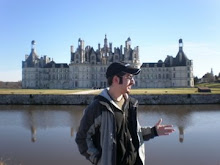
Where in the world is Mr. K?!
Sadly I fell away from blogging over the last summer and this fall. My job situation and the amount of bouncing around I have been doing has been keeping me almost too busy to think much less write an epic blog post. Well folks, I make no guarantees, but Mr. K is coming back.
Since we last left off my focus has shifted some away from policy and politics of our predicaments and focused more on skills and practice of living a more sustainable life. Along with that shift I have realized the necessity in skill development and refinement. This focus actually came from my recent participation in my local Fencing School, where I have taken a coaching role, teaching private and group lessons along with the facilitation of larger group lessons and activities. Focusing on improving my fencing skills, as an educator, has really helped develop an idea of the types of things I would like to focus on in my own life.
Along with my ever deepening foray into fencing, I planned and executed the great experiment that was known as Xtreme Camp. Xtreme Camp is a nine week, extreme sports and outdoor adventure summer day camp, designed for children ages 8-14. This camp involved about sixty to eighty campers a week participating in a variety of activities from mountain boarding and paintball to orienteering and survival skills. I had seven counselors and about five CIT's working with me. Together we created one of the most successful summer camp programs in the area. Again a lesson learned here was how to be creative and how best to employ ingenuity and leadership qualities.
So with all that being said I hope to be bringing you more posts in the future and if I can't find the time at least you know that I am out there doing good things and working hard to change the world for the better! See you all soon!
~K
Since we last left off my focus has shifted some away from policy and politics of our predicaments and focused more on skills and practice of living a more sustainable life. Along with that shift I have realized the necessity in skill development and refinement. This focus actually came from my recent participation in my local Fencing School, where I have taken a coaching role, teaching private and group lessons along with the facilitation of larger group lessons and activities. Focusing on improving my fencing skills, as an educator, has really helped develop an idea of the types of things I would like to focus on in my own life.
Along with my ever deepening foray into fencing, I planned and executed the great experiment that was known as Xtreme Camp. Xtreme Camp is a nine week, extreme sports and outdoor adventure summer day camp, designed for children ages 8-14. This camp involved about sixty to eighty campers a week participating in a variety of activities from mountain boarding and paintball to orienteering and survival skills. I had seven counselors and about five CIT's working with me. Together we created one of the most successful summer camp programs in the area. Again a lesson learned here was how to be creative and how best to employ ingenuity and leadership qualities.
So with all that being said I hope to be bringing you more posts in the future and if I can't find the time at least you know that I am out there doing good things and working hard to change the world for the better! See you all soon!
~K
Friday, March 19, 2010
Communitarianism
This is a good article I found on the Times's website. Give it a read. I think Phillip Blond's essays echo many of my own feelings.
Tuesday, March 9, 2010
Planning with Intent: Planning my Intentional Community
So planning for a long term intentional community might seem like a big and scary task. Something that might easily overwhelm any person who was to take on such a venture, but for as complicated as it is, to plan such a community isn't insurmountable. I have been kicking around ideas to plan, build, and make profitable a intentional community aimed towards self sustainability, agricultural education, and a farm stand/store. Below is my starting five year plan.
The Compound....(Yea I know its kind of intimidating but we haven't figured a name yet)
The Compound....(Yea I know its kind of intimidating but we haven't figured a name yet)
- Year 0
- Membership:
- 4-8 central starting members
- Likely to be divided between major financial contributors and major labor contributors.
- Planning will be equally shared and voted on, so a odd number of people would be best.
- Full-time, live in staff responsible for labor, building, and management.
- Part-time, non-live/seasonal live-in in staff responsible for finance, legal, PT-labor.
- Central members set goals and a overarching vision for group/project.
- Plans that set guidelines and expectations for years 1, 3, 5, 10, 15, 20, etc.
- Combine initial investments and incorporate as a group.
- Search for a suitable land investment:
- 150-200acres
- Good water, (lake, ponds, streams, rivers, quality ground water)
- Good initial soil and slope for farming
- Reasonable timber resources for building and sustainable timber operation
- Proximity to local municipalities
- Proximity to major towns and/or cities
- Access to local grid (phone, power, network)
- Standing structures are a bonus
- Previously farmed land is a bonus
- Set final plan for farming and long term expansion of farming efforts
- Viable crops, cash crops, subsistence
- Crop rotation
- Agricultural style (organic, no-till, etc)
- Make initial contacts with Timber management company
- Early income potential
- Begin initial equipment investments
- Basic tools
- Tractor and attachments
- Portable Sawmill? (would be excellent for structure building)
- Power generation equipment (solar or small scale wind)
- Water storage
- Power tools
- Year 1
- Establish residency.
- Initially part time
- Rehab of standing structures and construction of small scale residences
- Initial structure building prep
- Season timber for building (why we would use/need a sawmill)
- Establish structures for farm facilitation and equipment storage
- Clear/prep land for farming.
- Establish green manure/composting/soil building program at this time to effectively recycle cleared materials.
- Soil tests for pH and mineral contents to plan amendments and initial cover crops
- Cut and dry firewood for future
- Establish water and waste systems
- water conservation and protection
- water acquisition
- if a well is needed have it dug
- water storage (cistern or catchment system)
- waste water recycling. (earthships model)
- waste recycling (composting)
- Establish subsistence farm
- provide food to residence
- provide crop effectiveness feedback
- Plan and establish initial animal husbandry
- chickens are easiest!
- plan for sheep, pigs, horses, cows, or whatever animals are desired for draft and food purposes.
- Begin contacting schools for initial internship possibilities and planning
- cheap labor
- agricultural education is positive for the community
- get kids out of the cities and off the streets for the summers
- provide skills, training, and food for good, honest labor on the farm
- Years 2-3
- Establish living quarters for full time residents and a bunkhouse for visitors.
- Living spaces would be best if shared initially via a large common farmhouse or lodge.
- Built from harvested timber for year before, and built with recycled or locally sources materials. Strawbale would be best, in my opinion.
- Expand farm to commercial scale.
- Expand residential food garden too support a local farm stand and farmers market stand. Possibility would exist to create a CSA out of farm should that be desired at the time.
- Cut and clear more land, expand crop variety.
- Management of farm must be efficient if venture is to succeed
- Begin implementation of internship program to staff farm through the summer months
- This would also be a good time to begin looking for people to "buy in"
- Expand animal husbandry and seek a facility to process animals locally or on site if possible.
- These years will be critical to success of venture because of initial dependence on the success of the farm and related commercial ventures. If revenue from farm is substantial enough to see a profit then profit should be reinvested into the farm in order to expand and streamline production. Larger farm=larger return.
- Begin development of processed foods such as syrup, honey, cheeses, preserves, pickled vegetable etc as an expansion of agricultural market.
- Years 4-5
- If things with farm are on an even keel this would be time to begin planning of other investments on site.
- Suggestions include: meeting spaces, artists retreats, artistic facilities and work spaces, bed and breakfast, restaurant etc.
- These must be viable businesses that stand alone from farm financially. Financial interdependence could be a dangerous web should one venture or another fail.
- Lodge and surrounding full time residences should be complete along with workshop spaces, equipment sheds, water storage and processing, bunk houses, part time residences etc. These should have power and facilities independent of one-another.
- Development of a CSA group to better facilitate farm growth.
So this is where my ideas begin to stretch and get foggy. However, this is just because I have been more preoccupied with the details of the initial buildup that I haven't developed a solid plan that extends further than five years. So here is where I want your input and suggestions. What can be developed further? What can be added? What should be changed? What risks do you see? What could potentially make for a more sound idea? Anything you wish to contribute would be appreciated! Thank you!
Friday, March 5, 2010
America the Miserable
I heard this article recently on NPR and thought that it was more than worth discussing. America the Miserable by Patrick Allitt, talks about the decline and fall of our American "can do" attitude. It is a pretty interesting look at our country's collectice psyche and how much we have changed as Americans since the Second World War.
I beleive he is definately onto the obvious here, America has lost its "Can Do!" spirit which we once held is such high reguard. What has replaced this feeling? Allitt says we are a nation of cynics and malcontented individuals, pessemistic of our country and living in perpetual fear of "them". I can definatley say I agree. We are ruled by CNN news breifs about the latest terror assesment level, and are content to argue silly indifferences while the country collapses instead of save ourselves. So what is our new attitude?
I think we could call the new American perspective "Can Do Someday". We are prone, these days, to say we can do something about a problem but we will do it someday soon. Healthcare reform? Sure lets debate it to death and come up with a solution that we can someday put into law. Energy reform? Awesome lets have the alternative energy companies, car makers, and fossil fuel decryers argue about it indefinately the market will give us a sustainable answer someday soon. Joblessness? OK! Lets give companies all sorts of money to pump into their economic lifesupport machines so they can take out their corperate bonuses and be happy so they will hire new people someday next quarter or maybe in a fiscal year from now. Global Warming or Climate Change? Nah that isn't even a real thing! Washington had snow! So did Texas! It might happen someday but it wont happen today so we don't have to care.
Yes we have become a nation of off putters. Giving out problems to the next generation so the modern bourgeoisie can enjoy their SUV's and cable television, anyone want some chocolate covered strawberry's? They are perfect to forget about these cold winters! Yes lets revel in our greed and excess because we don't have to worry about it someone will fix our problems, someday.
What do you think? Do you agree with Allitt? What do you think about my ideas? Have something different? Lets hear it! I would love this one to become a debate!
I beleive he is definately onto the obvious here, America has lost its "Can Do!" spirit which we once held is such high reguard. What has replaced this feeling? Allitt says we are a nation of cynics and malcontented individuals, pessemistic of our country and living in perpetual fear of "them". I can definatley say I agree. We are ruled by CNN news breifs about the latest terror assesment level, and are content to argue silly indifferences while the country collapses instead of save ourselves. So what is our new attitude?
I think we could call the new American perspective "Can Do Someday". We are prone, these days, to say we can do something about a problem but we will do it someday soon. Healthcare reform? Sure lets debate it to death and come up with a solution that we can someday put into law. Energy reform? Awesome lets have the alternative energy companies, car makers, and fossil fuel decryers argue about it indefinately the market will give us a sustainable answer someday soon. Joblessness? OK! Lets give companies all sorts of money to pump into their economic lifesupport machines so they can take out their corperate bonuses and be happy so they will hire new people someday next quarter or maybe in a fiscal year from now. Global Warming or Climate Change? Nah that isn't even a real thing! Washington had snow! So did Texas! It might happen someday but it wont happen today so we don't have to care.
Yes we have become a nation of off putters. Giving out problems to the next generation so the modern bourgeoisie can enjoy their SUV's and cable television, anyone want some chocolate covered strawberry's? They are perfect to forget about these cold winters! Yes lets revel in our greed and excess because we don't have to worry about it someone will fix our problems, someday.
What do you think? Do you agree with Allitt? What do you think about my ideas? Have something different? Lets hear it! I would love this one to become a debate!
Friday, February 26, 2010
Student of the Future
The future is a scary prospect for anyone but this is doubly so, I feel, for the American Student. Students in our modern society have a lot coming to them; guaranteed primary and secondary educations, and a relatively acessable post-secondary education, at the very least vocational training. However how likely is it that these students will need, use, or even have these options, in the future? I believe the student of tomorrow will have to look at educational sucession in a different light and with a greater deal of realism and pragmatism.
Unfortunately for many students currently enrolled or recently graduated from a post-secondary (usually a undergraduate) degree program there are few options open to them for career opportunities. This is a function of the recessing economy and steady instability (haha) of job growth. With unemployment rising, at current, and outsourcing ever expanding what options does the recenty graduated twenty-something year old person have?
Being among those happy few, I know from experience that there are few options out there. One has to be in a very specialized field to get a job. Many of us find ourselves back in our jobs we held in high school, flipping burgers, packing groceries, or, as it is in my case, delivering. The few fields that were formerly safe bets; education, law enforcement, medicine, etc, are currently shrinking instead of growing like we were told six years ago. So many of us with relatively general credentials, such as a english or history degree or even business, are left wanting. What went wrong?
Our high schools, once reguarded as the finest in the world, are failing our students. The world doesn't need another lawyer or doctor or businessman, there are already enough. But what have we lost in the last thirty years? We have seen our workers, the blue-collar man, the farmers and factory workers dissapear. Where did they go? Well many to college and then they went on to the East Side and go their condo apartments or suburban castles. Now what? What happens when the industries that built our nation dont have the pool of workers that used to supply demand? They have sold out, as the remaining few workers demanded more and more from their corperate bosses. Its cheaper to do it in Mexico and China than Detroit and Pittsburg. So if white collar jobs are bloated with excess employees and applicants then why do we sell our production to other places?
If people were told at an early age that it is, in fact, acceptable to be a steel worker maybe we would have a steel industry. The same could be said for farmers and factory workers. Maybe these industries wouldn't have left in the first place, maybe we could rebuild them, maybe we will have to. With our economy out of control, the globalization powering oil drying up, and demand for expansion of domestic American production growing maybe it becomes the job of schools to tell students it is ok to be part of that growth.
So can our schools deliver such an unsavory message to students and parents? Do we really want to say "hey kids, its OK to work on an assembly line or mine coal." Will parents of suburbia allow their children to stay out of college in lieu of a job as an mechanics apprentice? I don't know if it will be acceptable but it seems that if we want to grow those parts of our economy, the ones that once made this country great, we will need to say its OK.
But if we supply workers will industry come back? Do we need to build it before they will come? I think it will be a process driven, of course, by necessity. Any company looking for positive P.R. will want to say it is expanding operations in the U.S.. Many of the Japanese car makers have already capitalized on this reopening or building new assembly plants in the lower 48 in order to supply the volume needed by their customers. Can the same be done with the consumer goods we all use every day? Yes, and it will be cheaper than importing these goods, at least it will be soon. As oil dries up and the battle over the next great black gold intensifies, many companies will have to bring production state side. The great intercontinental processsion of super tankers and container fleets will not be able to be supported. Signs of this are already apparent as some shippers are planning to retrofit their vessels with sails to cut fuel costs and consumption, but this is a desperate action of a dieing industry.
As the switch comes back from white collar, no dirt in my nails, jobs. We need to show our students and young people that a job is a job, and no matter what it is you are sucessful as long as you are happy. If that means putting the dash boards into the next F-150's or assembling solar panels, thats still good. Any domestic expansion is good and should be encouraged. Bring our students back home to the farm and show them how to do it.
Unfortunately for many students currently enrolled or recently graduated from a post-secondary (usually a undergraduate) degree program there are few options open to them for career opportunities. This is a function of the recessing economy and steady instability (haha) of job growth. With unemployment rising, at current, and outsourcing ever expanding what options does the recenty graduated twenty-something year old person have?
Being among those happy few, I know from experience that there are few options out there. One has to be in a very specialized field to get a job. Many of us find ourselves back in our jobs we held in high school, flipping burgers, packing groceries, or, as it is in my case, delivering. The few fields that were formerly safe bets; education, law enforcement, medicine, etc, are currently shrinking instead of growing like we were told six years ago. So many of us with relatively general credentials, such as a english or history degree or even business, are left wanting. What went wrong?
Our high schools, once reguarded as the finest in the world, are failing our students. The world doesn't need another lawyer or doctor or businessman, there are already enough. But what have we lost in the last thirty years? We have seen our workers, the blue-collar man, the farmers and factory workers dissapear. Where did they go? Well many to college and then they went on to the East Side and go their condo apartments or suburban castles. Now what? What happens when the industries that built our nation dont have the pool of workers that used to supply demand? They have sold out, as the remaining few workers demanded more and more from their corperate bosses. Its cheaper to do it in Mexico and China than Detroit and Pittsburg. So if white collar jobs are bloated with excess employees and applicants then why do we sell our production to other places?
If people were told at an early age that it is, in fact, acceptable to be a steel worker maybe we would have a steel industry. The same could be said for farmers and factory workers. Maybe these industries wouldn't have left in the first place, maybe we could rebuild them, maybe we will have to. With our economy out of control, the globalization powering oil drying up, and demand for expansion of domestic American production growing maybe it becomes the job of schools to tell students it is ok to be part of that growth.
So can our schools deliver such an unsavory message to students and parents? Do we really want to say "hey kids, its OK to work on an assembly line or mine coal." Will parents of suburbia allow their children to stay out of college in lieu of a job as an mechanics apprentice? I don't know if it will be acceptable but it seems that if we want to grow those parts of our economy, the ones that once made this country great, we will need to say its OK.
But if we supply workers will industry come back? Do we need to build it before they will come? I think it will be a process driven, of course, by necessity. Any company looking for positive P.R. will want to say it is expanding operations in the U.S.. Many of the Japanese car makers have already capitalized on this reopening or building new assembly plants in the lower 48 in order to supply the volume needed by their customers. Can the same be done with the consumer goods we all use every day? Yes, and it will be cheaper than importing these goods, at least it will be soon. As oil dries up and the battle over the next great black gold intensifies, many companies will have to bring production state side. The great intercontinental processsion of super tankers and container fleets will not be able to be supported. Signs of this are already apparent as some shippers are planning to retrofit their vessels with sails to cut fuel costs and consumption, but this is a desperate action of a dieing industry.
As the switch comes back from white collar, no dirt in my nails, jobs. We need to show our students and young people that a job is a job, and no matter what it is you are sucessful as long as you are happy. If that means putting the dash boards into the next F-150's or assembling solar panels, thats still good. Any domestic expansion is good and should be encouraged. Bring our students back home to the farm and show them how to do it.
Apps; App Atrophy of Humanity and Human Interactions
Everyone loves Apps, I'll admit even I do. But I have to wonder what they are doing to us as people. Is it the normal progression of our species to allow a computer to work out tip money for us or find our ways home? I agree that apps for your phone and widgets for your computer are great, they save time and time is money. But in the long run are we really serving ourselves by forgeting how to do things without being held by the iHand and guided through our iLives?
Lets look at some of the things we are losing as a society by our apps. According to Times the top ten iPhone apps of 09 were:
Tweety 2 (Twitter)
Yelp (restaraunt and bar reviews)
Slacker (streaming music)
Flight Track Pro (real time flight tracking)
Mint (budgeting tool)
Slingbox (mobile TV)
Small Chair (moble reading material)
Run Keeper (work out trainer)
Photoshop Moble (photoshop on the go)
Locavore (find the good local eats)
Ok so the top 10 of 2009 don't really eat away at human interactions or abilities that we should have as people but there are some things that raise eyebrows about what we are doing and how as people.
For instance the application Slingbox, awesome as it may be to the TV addicts, allows us to completely unplug from reality and suck ourselves into the world of TV sitcoms and dramas for however long we want. So on the bus and at the bar should we expect to or want to see everyone pacified by TV streaming to our phones? I think that might be destroing interactions that are very important to have. For instance you are going to become completely unsocial in social places if you sit there watching TV all the time. People wont come up to you and want to talk. Kinda missing the point of being in public at a bar or something like it, dont you think? Same could be said for streaming music and movie apps as well.
What about things like Yelp? If we trust everyone elses experiences we might miss out on having memorable experiences of our own. I, for one, really enjoy missadventures when they happen. I wouldn't want to miss out if I was told to by another person. Similarly I might in fact enjoy the place that everyone else decries.
I suppose the point that I am trying to make is that if we rely on our apps to solve every great dilema of our lives we might end up missing something important, or if not important, at least enjoyable. Things like tip calculators and GPS might be robbing us of skills that are important to have without needing the assistance of a machine. And lastly if we spend our lives playing Brick Breaker on our phones we might miss out on the world passing us by, and that would be a terrible thing to miss out on.
Lets look at some of the things we are losing as a society by our apps. According to Times the top ten iPhone apps of 09 were:
Tweety 2 (Twitter)
Yelp (restaraunt and bar reviews)
Slacker (streaming music)
Flight Track Pro (real time flight tracking)
Mint (budgeting tool)
Slingbox (mobile TV)
Small Chair (moble reading material)
Run Keeper (work out trainer)
Photoshop Moble (photoshop on the go)
Locavore (find the good local eats)
Ok so the top 10 of 2009 don't really eat away at human interactions or abilities that we should have as people but there are some things that raise eyebrows about what we are doing and how as people.
For instance the application Slingbox, awesome as it may be to the TV addicts, allows us to completely unplug from reality and suck ourselves into the world of TV sitcoms and dramas for however long we want. So on the bus and at the bar should we expect to or want to see everyone pacified by TV streaming to our phones? I think that might be destroing interactions that are very important to have. For instance you are going to become completely unsocial in social places if you sit there watching TV all the time. People wont come up to you and want to talk. Kinda missing the point of being in public at a bar or something like it, dont you think? Same could be said for streaming music and movie apps as well.
What about things like Yelp? If we trust everyone elses experiences we might miss out on having memorable experiences of our own. I, for one, really enjoy missadventures when they happen. I wouldn't want to miss out if I was told to by another person. Similarly I might in fact enjoy the place that everyone else decries.
I suppose the point that I am trying to make is that if we rely on our apps to solve every great dilema of our lives we might end up missing something important, or if not important, at least enjoyable. Things like tip calculators and GPS might be robbing us of skills that are important to have without needing the assistance of a machine. And lastly if we spend our lives playing Brick Breaker on our phones we might miss out on the world passing us by, and that would be a terrible thing to miss out on.
Subscribe to:
Posts (Atom)


 Posts
Posts

